

With each sunrise, your daily choices shape the underlying structure of your mental well-being. If you feel constantly drained, distracted, or anxious, you don’t need a massive life overhaul, you need a dopamine reset routine. Shifting your baseline focus starts with small, intentional actions that quiet nervous system noise and rebuild cognitive clarity.
Key Takeaways:
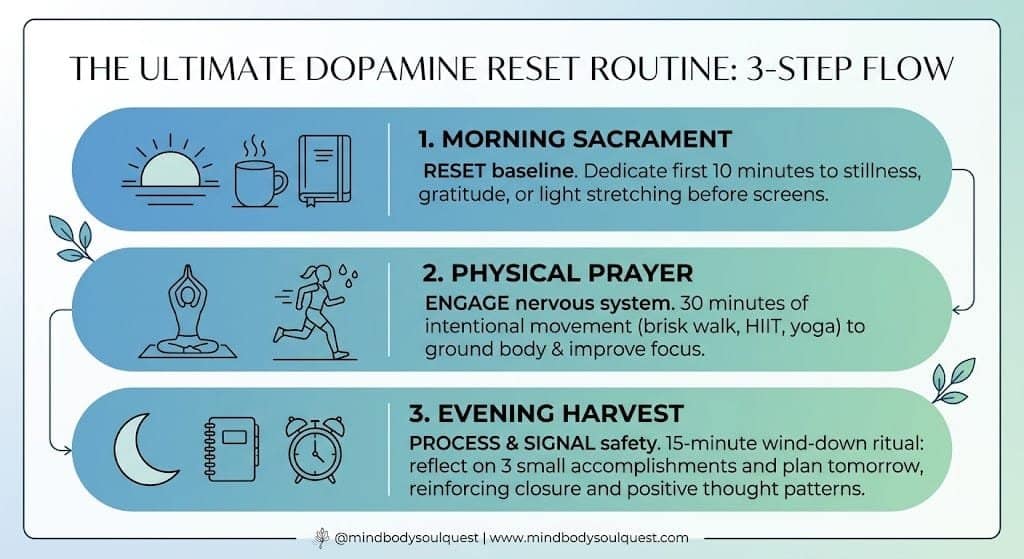
- Protect Your First 10 Minutes: Avoiding screens immediately after waking prevents instant cortisol spikes and sets a calm mental baseline.
- Movement as a Reset: 30 minutes of intentional motion anchors your nervous system and stops midday burnout in its tracks.
- Close the Feedback Loop: A 15-minute evening wind-down signals safety to your brain, preventing late-night rumination.
1. The Morning Baseline (Protect Your Focus)
Your first deliberate act upon waking sets the psychological tone for the entire day. Throwing yourself directly into emails, news alerts, or social feeds floods your brain with rapid dopamine spikes, leaving you reactive before your feet hit the floor.
Instead, commit the first 10 to 30 minutes of your morning to absolute stillness. Sip a glass of water, step outside for natural morning daylight, or practice light mobility work.
Headspace: Provides guided morning mindfulness sessions to build sustained attention before checking digital notifications.
Huberman Lab Morning Routine Protocol: Recommends 10–15 minutes of outdoor sunlight exposure within an hour of waking to trigger natural cortisol timing and optimize nighttime melatonin production.
Physical Engagement (Anchor Your System)
Your body becomes a vessel for mental clarity when physical movement is treated as a non-negotiable daily anchor. Engaging in structured exercise—whether a brisk walk, resistance training, or yoga—triggers a direct physiological feedback loop that burns off excess stress hormones like cortisol.
You aren’t exercising just to burn calories; you are actively grounding your nervous system and resetting dopamine sensitivity. Adding 20 to 30 minutes of continuous movement in the morning or early afternoon breaks up cognitive fatigue and sharpens deep-work focus.
MyFitnessPal: Logs hydration and balanced protein intake to keep brain chemistry stable throughout intense workouts.
Strava: Tracks daily walking and workout consistency to maintain visual accountability over a 30-day reset cycle.
The Midday Break (Disrupt the Fatigue)

Pushing through six hours of continuous screen time without a pause is a fast track to severe brain fog and digital burnout. Taking a deliberate 10-minute break at noon, completely detached from work and mobile devices, disrupts stress accumulation before it turns into full-blown exhaustion.
Step outdoors, practice box breathing, or eat lunch mindfully. Stepping away from the screen gives your prefrontal cortex time to recover, giving you a noticeable second wind for the afternoon.
Todoist: Offloads lingering mental task lists into a digital system so your brain can fully relax during midday breaks.
Freedom App: Blocks distracting websites and social media apps during work hours to enforce screen-free breaks.
The Evening Harvest (Signal Closure)

Your evening routine acts as the ultimate checkpoint for emotional balance. When you go straight from high-stress work or doomscrolling into bed, your brain stays in a state of high alertness, causing racing thoughts and poor sleep quality.
Spend 10 to 15 minutes processing the day. Write down three small wins or tasks you completed—not just what’s left on your to-do list. This simple act signals completion to your brain, reinforcing neural pathways linked to control, satisfaction, and deep rest.
Sleep Foundation Guidance: Outlines evidence-based blue-light reduction and room temperature protocols to maximize deep sleep.
Oura Ring: Monitors sleep architecture, heart rate variability (HRV), and resting heart rate to track physical recovery during a reset.
FAQ
Q: How fast can a dopamine reset routine reduce daily anxiety?
A: Most people notice a drop in baseline reactivity within 3 to 5 days of protecting their morning light exposure and eliminating immediate screen time upon waking.
Q: Do I need to follow every single step perfectly to see results?
A: No. Pick one anchor habit first—like the 10-minute morning delay on checking your phone—and build from there once it becomes automatic.
Q: Why is an evening wind-down routine crucial for sleep quality?
A: Lowering light levels and writing down lingering thoughts trigger natural melatonin production and tell your nervous system that it is safe to power down.
