


Self-care is not a luxury, especially in today’s always-on digital world where our mental well-being can be easily overshadowed by notifications, constant connectivity, and the pressure to portray a perfect life online. Prioritizing our mental wellness is essential to avoid burnout and maintain balance. In this blog post, we will explore the importance of self-care in the digital age, how to recognize warning signs of mental health issues, and effective, practical strategies to nurture your mental well-being amidst the digital noise. Let’s begin on a journey towards a healthier relationship with technology and ourselves.
Key Takeaways:
- Make self-care a non-negotiable priority: Prioritizing self-care is foundational to nurturing your mental wellness. Take time for yourself, set clear boundaries, and engage in activities that promote relaxation and joy.
- Establish a ‘Tech-Less’ routine: Digital devices are common contributors to stress and anxiety. Consciously limit screen time, take scheduled breaks from technology, and engage in offline activities that allow you to unplug and recharge.
- Practice proactive mindfulness: Mindfulness helps you stay present, reduces stress, and improves overall well-being. Incorporate accessible mindfulness practices like guided meditation, deep breathing exercises, or mindful walks into your daily routine.
Understanding Self-Care in the Digital Age
Self-care extends far beyond a wellness buzzword—it requires intentional, daily actions to safeguard physical, emotional, and cognitive health.
Defining Practical Self-Care
Practical self-care does not require an entire lifestyle overhaul. It spans small micro-habits, such as brief deep-breathing breaks or daily movement.
According to stress management guidelines from the NIMH Mental Health Resources, executing brief, consistent stress-reduction habits lowers physiological stress markers far more effectively than waiting for weekend recovery periods.
The Impact on Mental Health
Constant connectivity overloads working memory. Incorporating structured downtime alleviates anxiety and preserves focus.
Read our comprehensive guide on how to build a simple self-care routine to learn how daily micro-habits fit into busy schedules.
CDC Health Guidelines: Outlines how small, frequent breaks improve focus, reduce fatigue, and support long-term cardiovascular health.
Strategies for Digital Self-Care
| Strategy | Primary Benefit | Action Step |
| Digital Boundaries | Reduces cognitive overload | Enforce tech-free zones (e.g., bedrooms) |
| Mindful Engagement | Lowers emotional reactivity | Turn off non-essential push notifications |
| Physical Resets | Disrupts mental loops | Take 2-minute movement or stretching breaks |
Creating Healthy Digital Boundaries
Establish healthy boundaries to protect your focus from digital clutter. Set strict screen time limits and create tech-free zones in your home.
Digital Rule: Turn off non-essential notifications during high-focus work hours and set a 15-minute “worry window” on paper before bed to clear intrusive thoughts.
Holistic Wellness & Physical Fundamentals

Mental and physical health are deeply interconnected. Physical fundamentals—like sleep hygiene, joint movement, and blood sugar stability—directly support cognitive executive function.
Integrating Physical Movement
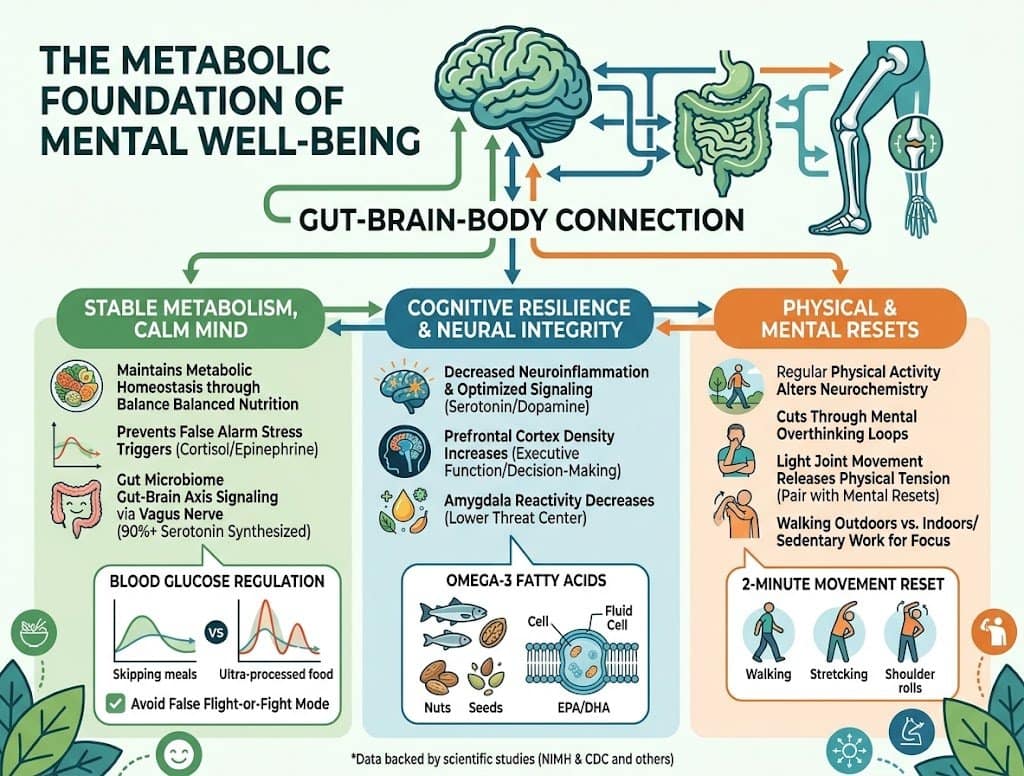
Regular physical activity alters neurochemistry and cuts through mental loops.
- Arthritis Foundation Resources: Recommends pairing quick mental resets with light joint movement to release physical tension built up from desk work.
- Explore our detailed breakdown on stopping overthinking through grounding techniques to see how physical motion resets mental focus.
The Role of Metabolism in Mental Well-Being
Skipping meals or relying heavily on ultra-processed, high-glycemic foods triggers rapid blood sugar fluctuations that directly mimic and exacerbate acute anxiety. When blood glucose plummets, the adrenal glands release compensatory stress hormones—primarily cortisol and epinephrine (adrenaline)—to mobilize glucose reserves. This physiological surge triggers rapid heart rates, jitteriness, and heightened arousal, which the central nervous system misinterprets as emotional panic or cognitive stress.
According to research guidelines from the NIMH Mental Health Resources, maintaining metabolic homeostasis through predictable nutrition prevents these false alarm stress triggers and supports executive cognitive function.
Biological Foundations of Metabolic Stability
Glycemic Regulation & Adrenal Spikes: Rapid spikes and drops in blood glucose force your autonomic nervous system into fight-or-flight mode. Pairing complex carbohydrates with lean proteins and healthy fats slows gastric emptying, stabilizing blood sugar and preventing involuntary adrenaline release.
Omega-3s & Neural Membrane Integrity: Eicosapentaenoic acid (EPA) and docosahexaenoic acid (DHA)—essential omega-3 fatty acids—reduce neuroinflammation and optimize cell membrane fluidity in the brain, improving neurotransmitter signaling for serotonin and dopamine.
Gut-Brain Axis Signaling: Over 90% of the body’s serotonin is synthesized in the gastrointestinal tract. Consuming nutrient-dense, fiber-rich foods feeds the gut microbiome, enhancing short-chain fatty acid (SCFA) production that directly communicates with the brain via the vagus nerve to reduce background physiological stress.
Tools and Communities for Support
Nurturing your mental wellness is easier with structured tools:
Community Connection: Joining local wellness groups or online forums fosters accountability and shared experience.
Guided Apps: Applications like Headspace or Calm offer accessible breathwork and mindfulness exercises.
Professional Support: Platforms like BetterHelp or Talkspace connect you directly with licensed therapists.
Digital Tools and Resources to Support Your Journey
Leveraging structured digital tools can streamline your self-care in the digital age, making mental health management accessible and consistent. Using mobile mindfulness platforms and virtual care options transforms your phone from a source of stress into a tool for recovery.
According to research guidelines from the NIMH Mental Health Resources, combining daily digital mindfulness exercises with professional therapeutic guidance builds cognitive resilience and mitigates chronic anxiety triggers.
Read our guide on building a simple self-care routine to see how daily micro-habits easily integrate with digital tools.
CDC Health Guidelines: Highlights how structured mental breaks and telehealth solutions help prevent workplace burnout and long-term fatigue.
| Platform Category | Leading Options | Core Function | Action Step |
| Mindfulness Apps | Headspace, Calm | Breathwork, guided meditation, sleep routines | Schedule a 5-minute mid-day mental reset |
| Online Therapy | BetterHelp, Talkspace | Virtual consultations with licensed therapists | Connect with a mental health professional remotely |
| Digital Boundaries | Freedom, OffScreen | App blocking, screen-time tracking | Block non-essential notifications during focus blocks |
Final Thoughts
Prioritizing digital self-care comes down to consistency over perfection. By filtering information intake, setting firm boundaries, and moving your body, you build long-term mental resilience.
