

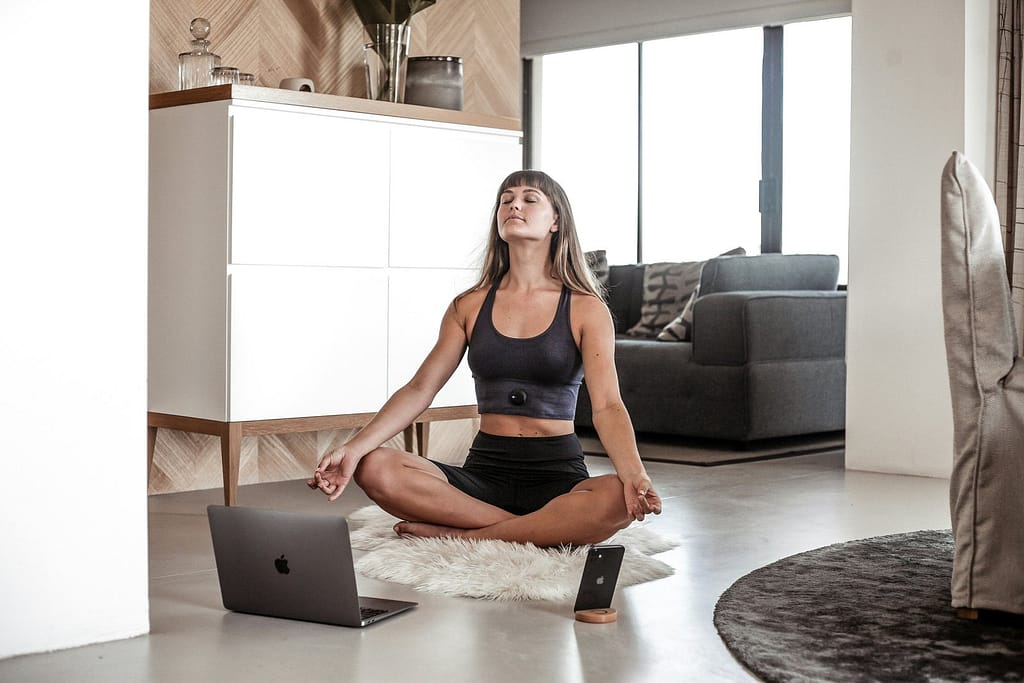
Your brain can’t think its way out of a state your body believes is a life-or-death emergency. When your heart races and your muscles lock up, that’s a survival response. You’re probably here because you’ve tried talking through your problems and your chest still feels like it’s in a vice.
Somatic exercises work well because they target your nervous system directly. Instead of arguing with your anxiety, you use specific physical movements to signal to your brain that you’re safe. It’s a bottom-up approach , start with the body to reach the mind, instead of staying stuck trying to think your way out.
Success comes from noticing how your body actually responds to each movement or breath.
This isn’t a replacement for professional mental health support , it it a way to get immediate, physical control over what your body is doing right now.
By the end of this guide, you’ll know how to:
- Notice where your body stores tension before it turns into a panic attack
- Use 30-second resets to calm your heart rate in public
- Build a daily habit that keeps your nervous system flexible
- Tell the difference between movement that actually helps and movement that’s just performance
Why Your Body Holds Anxiety
The word somatic comes from the Greek soma, “of the body.” While you’re busy analyzing your worries in your head, your body is running its own program. Anxiety is a physiological event. Your heart rate climbs, digestion slows, and your muscles brace for action.
Think of your nervous system like a light switch stuck in the “on” position. Your body is convinced it’s still under threat, and no amount of logic tells your heart to slow down on its own. That’s why just talking through a problem sometimes doesn’t move the needle, because you’re addressing the mind while the body is still sounding the alarm.
Mental anxiety is the “what if” loop running in your head. Physical anxiety is what that loop feels like in your body, the tight chest and the knotted stomach. Somatic work goes straight at the physical layer.
| Anxiety type | Common symptoms | Where it lives |
|---|---|---|
| Mental | Rumination, worry, intrusive thoughts | Cognitive |
| Physical (somatic) | Tight jaw, shallow breath, restlessness | Nervous system |
If you’ve ever felt numb or checked out during a stressful stretch, that’s also a somatic response. Your system is deciding the safest move is to shut down. None of this is a personal failing. It’s our biology using an outdated map.
Fast Resets for a Racing Heart
Try these techniques to bypass racing thoughts and signal safety directly to your body. Most of these work in under a minute.
- Extend your exhale. Inhale for 4 seconds, exhale for 6-8. The longer exhale directly tells your heart it’s safe to slow down.
- Stimulate the vagus nerve. Hum a low tone, or gently massage the area behind your earlobes. This nerve is the main line to your rest-and-digest system.
- Try 4-7-8 breathing. Inhale through your nose for 4 seconds, hold for 7, exhale through your mouth for 8. This resets the carbon dioxide balance that gets thrown off when you’re stressed.
- Ground through your feet. Push your feet into the floor and notice the exact texture beneath you. This pulls your focus out of your head and into the room.
- Release your jaw and neck. Drop your tongue from the roof of your mouth and let your shoulders fall. These are two of the biggest tension storage spots in the body.
These emergency resets are good for surviving a rough afternoon. Calming a flare-up is different from teaching your body to stay calm when there’s no crisis at all, it takes a daily practice.
Gentle Movement for Chronic Tension
Gentle somatic movement works because it focuses on internal sensation. In a normal workout, pushing through discomfort is the point. Here, it backfires, if you force a movement, your brain reads it as a threat and tightens further.
A daily sequence:
- Slow spinal rolls — tuck your chin and roll down one vertebra at a time. Stop at any “catch” and breathe into it before rolling back up.
- Shoulder shrugs and releases — pull your shoulders toward your ears with light effort, hold 3 seconds, then let them drop completely. Notice the weight settling.
- Gentle torso twists — seated, rotate slowly to one side, leading with your eyes, only as far as feels effortless. Repeat on the other side.
- Mindful walking — take ten steps, paying full attention to your heel striking the ground and your weight shifting to your toes.
Check in as you go: does this feel heavy or light? Is there a pulse here? That’s the awareness that lets you catch tension before it builds into a spike.
Why You Might Feel Worse Before You Feel Better
Somatic work can make you feel more anxious at first, because it forces you to notice sensations you usually push past or ignore. If you carry stored stress or trauma, your brain may treat certain body sensations as threats. When you start breathing or moving with intention, it can sound a false alarm.
Sometimes the reaction is a shutdown. Feeling stuck, heavy, or numb is dissociation: a biological circuit breaker, not a failure on your part.
If that happens:
- Stop the movement. Open your eyes and look around the room.
- Shift to something external , like name three blue objects, or touch a hard surface.
- Reduce the dose. Next time, try 10 seconds instead of a minute, or move an inch instead of your full range.
- If you feel nothing, don’t hunt for a sensation , just notice the blankness as its own state.
- Change your environment. Standing up or switching chairs can be enough of a reset.
If exercises consistently trigger intense flashbacks or panic you can’t come down from, that’s a sign to work with a trauma therapist rather than push through alone.
Making It a Habit
The biggest reason wellness routines fail is starting too big. An hour on the mat trying to “fix” your anxiety in one sitting usually backfires. Somatic work is about incremental safety: showing up for your body even on the days you feel fine, not just during a crisis. If you only practice mid-spiral, your brain can start associating the movements themselves with high alert.
- Stack the habit. Attach your practice to something you already do daily — brushing your teeth, waiting for coffee to brew.
- Keep it short. Five to ten minutes beats a marathon session you’ll eventually skip.
- Know your why. Pick the specific sensation you want to shift — a tight chest, a clenched jaw — and let that be your anchor.
- Track how you feel, not whether you did it. Note shifts in muscle softness or breath depth instead of just checking a box.
| Barrier | Fix |
|---|---|
| “I don’t have time.” | 60 seconds during a bathroom break counts. |
| “I don’t feel anything.” | Focus on the absence of tension in one small spot, like a finger. |
| “I forgot.” | Set a phone alarm labeled with a physical cue, like “Drop shoulders.” |
If you miss a day, the fix is the next 30-second window. Don’t try starting over from scratch.
Key Takeaways
- Consistency beats intensity. A 2-minute body scan daily does more than one long session a month.
- The exhale is your lever. Extending it to 6-8 seconds is the fastest way to signal your nervous system to slow down.
- Movement breaks a freeze response. Wiggling your toes or humming can bring you back when you feel numb or stuck.
- You can’t think your way out of a physical stress response — you have to move your way out.
- These tools support self-regulation. They don’t replace therapy for deep-seated trauma.
Next Step
Pick one exercise from the fast-reset list above. Set a timer for three separate moments today, and when it goes off, spend 60 seconds on that one movement. Afterward, jot down one physical sensation you noticed , for example, “warmth in my hands,” “tightness in my chest.”
That’s the awareness that lets you catch anxiety before it takes over. Stick with this one exercise for a week before adding anything new.


